
Not Every Builder Builds the Same Way
Before comparing builders yourself, it's worth knowing that the 2024 America's Most Trusted Home Builder study (58,991 consumer responses nationwide) ranked several builders active right here in Hall County: Ashton Woods placed #2 nationally, with Dream Finders, David Weekley Homes, and Century Communities all placing in the top half of the full ranking. This is real, independent consumer trust data — not marketing.
Works for the Builder
I represent buyers across every builder in this market—which means I'm not selling you one company's product, and I can tell you what's actually wrong with one.
Shannon Sanborn • The Flying Realtor
Builder contracts, warranties and structural option lists vary by company. Buyer representation costs you nothing additional. Ask Shannon to review any builder agreement before you sign.
"A new construction home is more than a purchase — it's an investment in your future. Explore Gainesville, GA builders who are creating exceptional homes in some of the most desirable communities in North Georgia."
— The Flying Realtor
Two Ways to Keep Exploring
Explore New Construction by Community
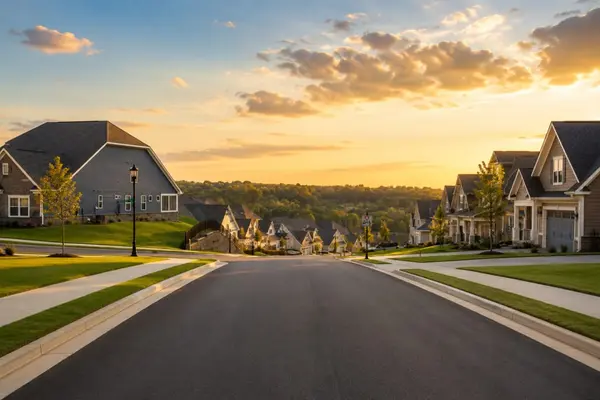
Prefer to browse by neighborhood instead of scrolling every listing? Compare Hall County's active new construction communities side by side — including the builders behind each one, real floor plans, and what actually makes each community different.
New to New Construction? Start Here First
We take the stress out of selling your home by providing a seamless experience from start to finish. Our team will put you in the best position to market your home and sell it for the highest possible price.
Let's Make Your Next Move Clear
Not Sure What Your Next Step Should Be?
Whether you're buying, selling, relocating, or exploring new construction, tell me what you're planning. I'll help you understand your options and build the right plan.
Call or Text 678-997-0206No pressure. Just clear, honest guidance.
"Building a new construction home in Gainesville, GA starts with choosing the right builder. Discover trusted Hall County home builders creating quality homes designed for modern living, lasting value, and growing families."
— The Flying Realtor
"North Georgia's best new homes begin with experienced builders who understand quality craftsmanship, energy-efficient designs, and the importance of creating homes that fit the lifestyle of today's buyers."
— The Flying Realtor
"From custom home builders to established new home communities in Gainesville and Hall County, we connect buyers with trusted professionals who bring their vision of homeownership to life."
— The Flying Realtor
Explore New Construction Home for Sale in Gainesville, GA
- 1/33 33
 3 Beds 2.5 Baths 1,877 SqFt$333,990Open Mon 2PM-5PM
 - 1/30 30
 3 Beds 2.5 Baths 1,857 SqFt$324,990Open Mon 2PM-5PM
 - 1/30 30
 3 Beds 2.5 Baths 1,857 SqFt$332,990Open Mon 10:30AM-5:30PM
 - 1/2 2
 5 Beds 3.5 Baths 2,562 SqFt$477,450Open Fri 11AM-2PM
 - 3D
 4 Beds 2.5 Baths 2,498 SqFt$469,990Open Wed 10AM-4PM
3963 Alderstone DR, Flowery Branch, GA 30542
Listed by Taylor Morrison Realty of Georgia, Inc.
Single Family Home

- 1/33 33
 4 Beds 2.5 Baths 2,636 SqFt$476,995Open Fri 11AM-2PM
Hall County Builder FAQs: How to Vet the Company Building Your Home
Model homes are staged to sell. What actually determines whether you're happy in year five is how the house was built and how the builder behaves after closing. Here's how I evaluate builders — and how you can too.
What's the difference between a volume production builder and a semi-custom builder?
Volume production builders construct a defined set of floor plans repeatedly at scale, with limited structural changes and a fixed design center menu. Semi-custom builders offer more structural flexibility and finish selection, generally at a higher price point and a longer timeline. Both build to the same code and are inspected by the same Hall County inspectors.
The honest answer after twenty years on job sites: bigger is not automatically worse, and boutique is not automatically better. Volume building actually produces real consistency when the crews are good, because they're repeating the same details hundreds of times and the framing crew has built your plan before. What volume building does introduce is speed, and speed is where details get missed. Semi-custom gives you flexibility but often means a crew building a plan for the first time. Neither model tells you about the house you're actually buying. The specific crews working your house during your specific window matter more than the logo on the sign — which is exactly why I want eyes on the framing before the drywall goes up regardless of builder.
How do I research a builder's warranty follow-through before I buy?
Check the builder's rating and complaint history with the Better Business Bureau, search state licensing and any disciplinary records, read reviews specifically from buyers who are one to three years past closing rather than at move-in, and — most usefully — talk to actual homeowners in the builder's completed Hall County communities.
Move-in reviews tell you almost nothing about warranty performance, because nothing has broken yet. What you want are the people who filed a claim in month fourteen. Knock on a door in a delivered phase and ask directly: did they respond, how long did it take, did they fix it right the first time. It takes an afternoon and it's better data than any online rating. Also read the actual warranty document before you're under contract — I researched and documented the real warranty terms across fifteen Hall County builders, and "ten-year warranty" means genuinely different things depending on whose sign is in the yard. You can compare them side by side here.
Can I negotiate structural changes or floor plan modifications with a production builder?
Limited changes are sometimes possible, but production builders generally offer a fixed menu of pre-engineered structural options rather than true custom modifications. Any change must be selected at contract, must work with the approved plan and homesite, and typically cannot be added once construction begins.
Where buyers actually have leverage isn't in redesigning the plan — it's in which options they select and what the builder contributes toward them. Focus your energy there. The structural list is where the permanent money lives: basement stairs, garage extensions, covered outdoor structures, plumbing rough-ins, window placement. If it's behind a wall, under a slab, or poured in concrete, decide now. Cosmetic selections you can change in year eight for a fraction of design center pricing. I've watched buyers spend heavily on a kitchen package while skipping a basement stair option they desperately wanted three years later — that's the mistake worth avoiding.
What red flags should I look for when touring a model or quick move-in home?
In a finished home, look for inconsistent caulk lines and gaps at trim joints, doors that don't latch cleanly or swing on their own, uneven or bouncy floors, drywall seams and nail pops visible in raking light, tile lippage and inconsistent grout lines, and cabinet doors that don't align.
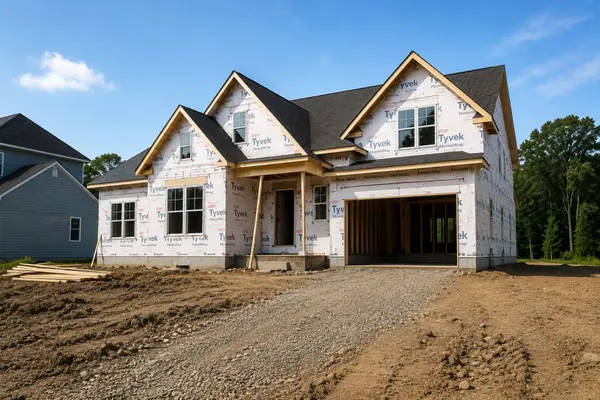
Here's what those actually tell you. Individually, most are cosmetic and fixable. Collectively, they're a signal about site supervision — if the finish trades weren't held to standard on the things you can see, ask yourself about the things you can't. My highest-value tells go beyond finish work: doors swinging open on their own can indicate the framing isn't plumb; a bouncy floor can mean joist spans or blocking; a hollow sound underfoot on tile suggests inadequate mortar coverage. Outside, I'm looking at grading falling away from the foundation, where downspouts discharge, and flashing at roof-to-wall transitions — that last one is where I've seen the most expensive failures start. Bring a marble for the floors if you want, but honestly, bring someone who's framed a house.
Are builder incentives better than a lower purchase price?
It depends entirely on the numbers, and the comparison is worth running rather than assuming. A rate buydown lowers your monthly payment but leaves the purchase price — and therefore your loan balance, your tax basis, and your comparable sales — at the higher figure. A price reduction lowers all of those permanently.
How to actually evaluate it: get a Loan Estimate from the builder's lender and one from an outside lender for the same loan on the same day, then compare total cost including rate, points, fees, and the incentive together. Two things to check specifically. First, whether the buydown is temporary — many are structured for the first year or two rather than permanently, and that distinction is rarely volunteered at the sales desk. Second, whether a reduced incentive is available with outside financing. Builders often prefer incentives over price cuts because a price cut becomes a comparable sale that affects everything else they're selling in that community — which is useful context when you're negotiating. I'm a REALTOR®, not a lender; run the actual numbers with licensed loan officers.
How do I find out if a builder will finish the community on schedule?
Look at what the builder has already delivered rather than what they've promised. Drive their completed Hall County communities and check whether amenities were built, whether infrastructure and landscaping were finished, and how long earlier phases took from release to delivery.
The mechanism most buyers don't know about: amenity and infrastructure delivery is typically tied to a lot-closing threshold buried in the community documents, not to a calendar date. That's why a pool can sit unbuilt for years in a slow-selling community. Ask for the trigger in writing rather than a verbal timeline, because the sales office often genuinely doesn't know. I've researched Hall County communities where builder materials described the same amenity as both existing and "future" on different pages. Also ask what's platted adjacent to your homesite and where the construction haul route runs — living on it for two years is a real cost that never appears on a price sheet.
What is the actual process for filing a new home warranty claim in Georgia?
Most builders require warranty claims to be submitted in writing through a specified portal, form, or email address within the applicable coverage period, followed by an inspection and then repair scheduling. Coverage periods, exclusions, notice requirements, and dispute procedures are governed by the warranty document you sign at closing.
Practical guidance that saves people real trouble. Submit everything in writing even when a phone call would be faster, and keep the record — verbal reports don't establish a claim date. Watch the deadlines closely, since workmanship coverage typically ends at twelve months and that's exactly when settling and installation issues surface; do a thorough eleventh-month walkthrough and file everything before the window closes. Read the dispute resolution clause before you sign, because many builder warranties require binding arbitration rather than court. And know that many warranties are administered by a third party rather than the builder directly, which changes who you actually call. Warranty terms carry legal consequences — review yours with your closing attorney.
Am I limited to the builder's design center menu for upgrades?
For structural options, generally yes — those must come from the builder's approved menu, be selected at contract, and be engineered for the plan. For cosmetic finishes, you're typically limited to design center selections during construction, but nothing prevents you from upgrading finishes yourself after closing.
That distinction is where buyers save serious money. Countertops, backsplash, light fixtures, faucets, mirrors, paint, and flooring in secondary rooms can all be upgraded post-closing, usually for less than design center pricing, often meaningfully less. What you cannot do later without major expense is move a wall, add a bath rough-in, extend a garage, frame basement stairs, or build a covered outdoor structure. My rule: if it's behind a wall, under a slab, or poured in concrete, decide now. If you could hire someone to swap it out on a random Saturday, it can wait. One caution — check your HOA's architectural review requirements before planning exterior changes after closing.
Do builders use their own crews or subcontract the work?
Nearly all production builders in Hall County — and most builders generally — use subcontracted trade crews rather than direct employees. The meaningful question isn't whether they subcontract; it's how tightly they manage those crews and whether they use the same trades consistently.
In more than 20 years working across every phase of construction, this is the thing I'd tell you matters most, and almost nobody asks about it. A builder who runs the same framing crew community after community gets consistent work, because that crew knows the standard and knows they'll be back. A builder chasing the lowest bid each phase gets whatever that week's crew felt like doing. You can partly see this yourself: ask the site superintendent how long they've worked for the builder and whether they use the same trades across communities. High superintendent turnover is a signal. Then verify it at the pre-drywall walkthrough, where the framing, mechanical rough-in, and insulation tell you the truth regardless of what anyone said at the sales desk.
What happens to my deposit if a builder has financial trouble before closing?
It depends on how your deposit is held. Funds held in escrow by a third party are generally better protected than funds paid directly to the builder and used as working capital. Your contract specifies which arrangement applies, and this is a question to ask before you sign, not after.
This is the scenario nobody wants to think about, and it's a legitimate question — particularly with earnest money plus design center deposits, which together can reach a substantial figure on a to-be-built home. Ask directly: who holds my funds, are they in escrow, and what happens if the builder cannot complete the home? Then have your closing attorney review the answer against the contract language before you sign. Georgia is an attorney closing state, so you'll have one involved anyway; use them earlier than closing day. I'm a REALTOR®, not an attorney, and this is genuinely a legal question — but it's one I make sure every client asks.
Vetting a Builder in Hall County?
I'm Shannon Sanborn — The Flying Realtor with eXp Realty. Over more than 20 years in construction I've done the framing, run the electrical, run the plumbing, set the HVAC, hung the windows and doors, and finished out the trim, tile, and cabinets. I've seen what tight site management looks like and what happens without it — and I know which questions actually surface the difference.
I represent buyers across every builder in this market, which means I'm not selling you one company's product. Compare builder warranties side by side, browse active communities, or explore the Resource Center.
Call or text Shannon Sanborn: 678-997-0206
Email: shannon@exploregainesvillega.com
Important: contact me before your first visit to any builder's sales office, since most builders require your agent to be registered at that first visit. Note: I'm a licensed REALTOR®, not an attorney or lender. Warranty terms, contract provisions, and deposit protections carry legal consequences and should be reviewed with your closing attorney.
What My Clients Are Saying

Brandi Browning


Ann Marie

Nikilas Harris
Ready to Compare Builders in Person?
Choosing a builder isn't just about the floor plan on paper — it's about construction quality, warranty coverage, and how a builder actually treats buyers after closing. With more than 20 years of hands-on construction experience, I'm here to help you evaluate any builder on this list, or one that isn't, before you ever sign a contract.
 The Flying Realtor® | eXp Realty
Ready to Take the Next Step?
Let's Talk About Your Real Estate Goals
Whether you're buying your first home, exploring new construction, selling your current property, or relocating to Gainesville and Hall County, I'm here to help you make confident decisions every step of the way.
What sets me apart is 20+ years of experience in all phases of new construction homes — from framing and electrical to roofing, siding, doors, windows, cabinets, and structural repairs. I've worked on homes from the ground up.
That experience allows me to see beyond cosmetic finishes and provide insights that help protect one of your biggest investments — especially when buying new construction in Hall County.
When you work with me, you'll get honest advice, responsive communication, and a trusted advocate who is committed to helping you achieve your real estate goals — not just complete a transaction.
I'd love the opportunity to earn your trust and help you take the next step. Schedule a consultation today, and let's build a plan that's right for you.