
New Construction Advocacy: Gainesville & Hall County
Ends After Year One
When you purchase eligible new construction with me, I include three additional years of eligible home-warranty coverage—at no additional cost to you.
Shannon Sanborn • The Flying Realtor
Buyer closing incentive subject to eligibility, warranty-plan terms and exclusions, broker approval, lender disclosure and transaction compliance. Ask Shannon for complete details.
| Coverage Area | Standard Builder 1-Year Warranty | My Extended 4-Year Protection Plan |
|---|---|---|
| Duration | 1 year | 4 total years (1 year builder + 3 years extended) |
| Workmanship & Materials | Covered through year 1 only | Covered through year 1 (builder), then transitions to extended plan |
| Electrical & Plumbing Systems | Expires at 12 months | Covered up to year 4 |
| Major Mechanicals (HVAC, etc.) | Varies by builder, often drops off early | Protected long-term through year 4 |
| Who Pays After Year 1? | You — out of pocket | I cover the cost, at no charge to you |
This is a buyer closing incentive subject to broker approval, lender disclosure, and transaction compliance — ask Shannon for full details on eligibility.
Why This Matters in Hall County
Let's Make Your Next Move Clear
Not Sure What Your Next Step Should Be?
Whether you're buying, selling, relocating, or exploring new construction, tell me what you're planning. I'll help you understand your options and build the right plan.
Call or Text 678-997-0206No pressure. Just clear, honest guidance.
How Hall County's Builders Compare
| Builder | Workmanship | Systems | Structural | Administrator |
|---|---|---|---|---|
| Century Communities | 1 year | — | Up to 10 years or state statute of repose | Self / RWC |
| Lennar | 1 year | 2 years | 10 years | Self ("1-2-10") |
| D.R. Horton | 1 year | 2 years | 10 years | Residential Warranty Corporation (RWC) |
| Ashton Woods | 1 year | 2 years | 10 years | Residential Warranty Corporation (RWC) |
| David Weekley Homes | 1 year | 2 years | 10 years | Self ("1-2-10") |
| Ryan Homes (NVR) | 1 year | ~2 years | 10 years | Self |
| Dream Finders Homes | Confirmed, real warranty document | Not individually confirmed | To state statute of repose | Self |
| Kolter Homes | Confirmed | Confirmed | Confirmed via 2-10 HBW | 2-10 Home Buyers Warranty |
| McKinley Homes | 1 year (non-transferable) | — | Provided at closing | 2-10 Home Buyers Warranty |
| Chafin Communities | 1 year Fit & Finish | Years 2-10 | Years 2-10 | 2-10 Home Buyers Warranty |
| Peachtree Building Group | Confirmed | Confirmed | 10 years | Quality Builders Warranty (QBW) |
| O'Dwyer Homes | 1 year | — | ⚠️ Conflicting: 10 yrs (2-10 HBW) vs. 8 yrs (RWC) | Unconfirmed which |
| LGI Homes | 12 months | Not specified | Confirmed to exist, years not specified | Not specified |
| Taylor Morrison | Confirmed program exists | Not confirmed | Not confirmed | Not confirmed |
| Southwyck Homes | Not confirmed | Not confirmed | Not confirmed | Not confirmed |
Two Ways to Keep Exploring

Explore New Construction by Community
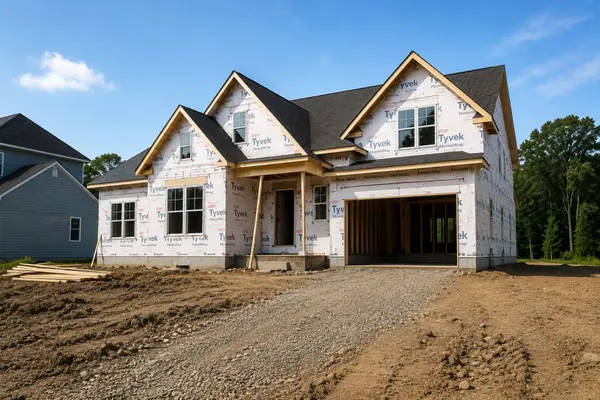
Prefer to browse by neighborhood instead of scrolling every listing? Compare Hall County's active new construction communities side by side — including the builders behind each one, real floor plans, and what actually makes each community different.
New to New Construction? Start Here First
We take the stress out of selling your home by providing a seamless experience from start to finish. Our team will put you in the best position to market your home and sell it for the highest possible price.
Ready to Buy a New Construction Home in Gainesville With Total Protection?
Browse New Construction Homes in Gainesville & Hall County
Explore the latest new construction homes for sale in Gainesville and Hall County, GA. Search available communities, compare floor plans, and discover homes built by some of North Georgia's leading builders.
- 1/33 33
 3 Beds 2.5 Baths 2,444 SqFt$491,418Open Sat 12PM-4PM
4711 Wilderness TRL, Flowery Branch, GA 30542
Listed by Pulte Realty of Georgia, Inc.
Single Family Home

- 1/13 13
 3 Beds 2.5 Baths 1,823 SqFt$354,910Open Sat 10PM-6PM
 - 1/11 11
 3 Beds 2.5 Baths 1,823 SqFt$314,910Open Sat 10AM-6PM
 - 1/14 14
 3 Beds 2.5 Baths 2,613 Sqft Lot$354,910Open Sat 10AM-6PM
 - 3D
 4 Beds 2.5 Baths 2,498 SqFt$469,990Open Sat 1PM-4PM
3963 Alderstone DR, Flowery Branch, GA 30542
Listed by Taylor Morrison Realty of Georgia, Inc.
Single Family Home
- 1/33 33
 4 Beds 2.5 Baths 2,636 SqFt$475,247Open Sat 1PM-5PM

New Construction Blog & Resources


New Construction Warranty FAQs: What's Actually Covered, and For How Long
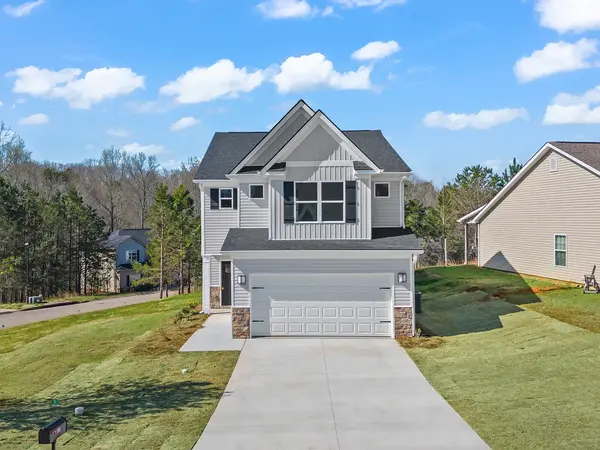
"Ten-year warranty" is one of the most misunderstood phrases in new construction. It almost never means what buyers think it means. Here's how coverage actually works in Georgia — including the year-two gap that catches nearly everyone.
What's the difference between a 1-year workmanship warranty and a structural warranty?
Most builder warranties are tiered. Workmanship and materials — drywall, paint, trim, tile, cabinetry, fixtures — are typically covered for the first year. Distribution systems like plumbing, electrical, and HVAC are usually covered for a longer intermediate period. Major structural components, meaning load-bearing elements, are covered for up to ten years.
So "ten-year warranty" almost always means ten years of structural coverage only, and structural coverage is deliberately narrow — it generally requires actual failure of a load-bearing element, not a crack in your drywall. The reason for the tiering is that cosmetic and installation issues surface fast, while true structural failures take years to manifest. The practical consequence is a coverage cliff at month twelve: workmanship protection ends right as settling and seasonal movement start producing visible problems. Read the actual warranty document before you're under contract. I've researched and documented the real terms across fifteen Hall County builders, and the differences are substantial.
Does the builder warranty cover HVAC, plumbing, and electrical after year one?
Typically yes, but for a limited period — many builder warranties cover distribution systems for roughly two years, sitting between the one-year workmanship period and the ten-year structural period. Coverage generally applies to the systems as installed, not to the equipment itself, which usually carries a separate manufacturer warranty.
That distinction causes real confusion. If your HVAC condenser fails, that's likely a manufacturer warranty claim on the unit. If the ductwork was installed wrong, crushed, or undersized, that's a builder workmanship issue — and workmanship coverage may already be expired. This is exactly the gap I've watched cost people money in years two and three, and it's the reason I provide extended coverage to my buyers rather than leaving them on the builder's timeline alone.
How does Georgia's statute of repose affect my right to sue a builder for defects?
Georgia's statute of repose, O.C.G.A. § 9-3-51, establishes an outer limit of eight years from substantial completion for bringing claims arising from deficiencies in the construction of improvements to real property. Separately, statutes of limitation impose their own, generally shorter, deadlines depending on the type of claim.
What this means practically: the eight-year repose period is an absolute ceiling, and Georgia courts have held it does not extend the applicable statute of limitations. In other words, your actual window to bring a claim may be considerably shorter than eight years depending on how the claim is characterized and when the cause of action is deemed to have accrued. Georgia case law in this area is genuinely complicated, and outcomes have turned on technical distinctions. If you believe you have a construction defect, consult a Georgia construction attorney promptly rather than waiting to see whether the builder resolves it. I'm a REALTOR®, not an attorney, and nothing here is legal advice — this is a general summary of publicly available statutes.
What does a third-party warranty administrator cover that a builder's own warranty doesn't?
A third-party administered warranty, such as those from 2-10 Home Buyers Warranty, is backed by an independent company rather than by the builder alone. The practical difference is that coverage does not depend on the builder remaining in business, remaining solvent, or choosing to respond.
That's the core value, and it's worth understanding clearly. A builder self-warranty is only as good as the builder's willingness and ability to honor it. If a builder exits the market, restructures, or simply stops returning calls, a self-warranty becomes difficult to enforce without legal action. A third-party administrator provides a defined claims process and an insurance-backed obligation independent of the builder. Third-party warranties also typically include a structured dispute resolution mechanism, which matters when you and the builder disagree about whether something is covered.
Do new construction warranties transfer if I sell my home?
Structural warranty coverage commonly transfers to a subsequent owner for the remainder of the coverage period, while workmanship coverage — being short-term — usually has expired before a resale occurs. Transferability rules, notice requirements, and any transfer fees are set by the specific warranty document.
This matters for resale value more than sellers realize. A home with four or five years of remaining transferable structural coverage is a genuinely stronger listing than an identical home with none, and it's a differentiator worth putting in the marketing. Some warranties require the seller to notify the administrator within a set window after closing, so check the transfer procedure before you list, not after you're under contract. Keep your warranty documents somewhere you can find them — I've watched sellers lose a real selling point simply because nobody could produce the paperwork.
Why do defects from Georgia's clay soil show up after the first year?
North Georgia's clay-heavy soils expand when saturated and contract when dry, producing seasonal movement. That cycle takes time to work through a new structure, which is why foundation settlement, grading and drainage problems, and related cracking commonly appear after a home has been through a full wet-and-dry cycle — often past the twelve-month workmanship window.
This is where twenty years of watching North Georgia sites genuinely matters. Red clay doesn't drain like sandy soil; water moves slowly through it and sits. A lot graded so the yard falls toward the foundation, downspouts discharging against the house, backfill that wasn't properly compacted, or a home sitting at the low point of a grade with uphill neighbors — none of those show up at closing. They show up in month sixteen after a wet spring. That's precisely why I evaluate grading and drainage before my clients choose a homesite, and why the coverage gap in year two is more than theoretical here. Document any settling or moisture issue in writing as soon as you notice it, and do a thorough eleventh-month walkthrough before workmanship coverage expires.
What do I do if the builder stops responding or denies my warranty claim?
Start by escalating in writing through the builder's stated claims procedure and keeping a complete record. If the builder is unresponsive or denies the claim, review your warranty for its dispute resolution provisions — many require mediation or binding arbitration rather than court. Georgia's Right to Repair Act, O.C.G.A. §§ 8-2-35 et seq., also requires pre-suit notice and an opportunity to repair in many residential construction defect actions.
That last point catches homeowners off guard: in many cases you must formally notify the builder and give them a chance to fix the problem before you can file suit. Skipping that step can get litigation stayed. Practically, this means documentation is everything — submit claims in writing even when a phone call is faster, photograph everything, keep dates, and note every response and non-response. If you're facing a denial on something significant, talk to a Georgia construction attorney rather than continuing to negotiate alone. A third-party administered warranty helps considerably here, because the administrator provides a claims path that doesn't depend on the builder's cooperation. Again: not legal advice, and procedural requirements should be confirmed with counsel.
Are appliances, roof shingles, and windows covered by the builder or the manufacturer?
Appliances, roofing materials, windows, water heaters, and HVAC equipment typically carry their own manufacturer warranties, which are separate from the builder's warranty. The builder's warranty generally covers installation of those components, while the manufacturer covers defects in the product itself.
This split is what produces the finger-pointing loop buyers dread. A leaking window may be a defective unit or a flashing and installation failure — and from inside your house, they look identical. Here's how I'd approach it: describe the symptom and let the professionals determine cause, rather than filing under one theory and getting bounced. Water intrusion at a window or roof-to-wall transition is more often a flashing and installation issue than a product defect, in my experience on job sites. Collect every manufacturer warranty document at closing and register the products that require registration — coverage can be forfeited by failing to register within the manufacturer's window.
How does extended warranty coverage affect my cost of ownership over five years?
Extended structural and systems coverage shifts the risk of specific major failures from the homeowner to the warranty administrator during the covered period. Its value depends on what's covered, the deductible, and what would otherwise come out of pocket.
The honest framing: extended coverage isn't insurance against every repair, and it won't cover routine maintenance or cosmetic wear. Where it earns its keep is in the years right after builder workmanship coverage ends, when installation-related and settlement-related problems surface and you'd otherwise be paying for them yourself. In North Georgia specifically, the clay soil cycle means those years carry real exposure. Whether extended coverage pencils out depends on the specific terms — read what's covered and excluded rather than relying on a summary.
What is the New Construction Advantage™, and how is it paid for?
The New Construction Advantage™ is four years of total warranty coverage I provide to my new construction buyers: year one under the builder's limited warranty, plus years two through four through 2-10 Home Buyers Warranty. It's commission-backed, meaning there is no additional cost to my buyers and no fee added at closing.
The reason I built this is straightforward. After more than twenty years on job sites, I know that year two is when things surface — settling, seasonal movement in North Georgia clay, and installation issues that weren't visible at the final walkthrough. That's precisely when most builder workmanship coverage has already expired. Rather than hand my clients a warranty comparison chart and wish them luck, I close the gap myself. It's funded out of my commission on the transaction, so nothing appears on your closing statement and nothing changes about the price you negotiate with the builder. If you're considering new construction in Hall County, call or text me at 678-997-0206 and I'll walk you through exactly what's covered.
Buying New Construction in Hall County?
I'm Shannon Sanborn — The Flying Realtor with eXp Realty. Over more than 20 years in construction I've done the framing, run the electrical, run the plumbing, set the HVAC, hung the windows and doors, and finished out the trim, tile, and cabinets. I know which problems show up in year two — and I built the New Construction Advantage™ so my buyers aren't paying for them.
Compare what fifteen Hall County builders actually cover, browse active communities, or explore the Resource Center.
Call or text Shannon Sanborn: 678-997-0206
Email: shannon@exploregainesvillega.com
Important: This page summarizes general warranty concepts and publicly available Georgia statutes for informational purposes only. It is not legal advice, and I am a licensed REALTOR® rather than an attorney. Warranty coverage, exclusions, notice requirements, transferability, and dispute procedures are governed by your specific warranty document and contract. For any construction defect matter, consult a licensed Georgia construction attorney.
What My Clients Are Saying

Brandi Browning


Ann Marie

Nikilas Harris
 The Flying Realtor® | eXp Realty
Ready to Take the Next Step?
Let's Talk About Your Real Estate Goals
Whether you're buying your first home, exploring new construction, selling your current property, or relocating to Gainesville and Hall County, I'm here to help you make confident decisions every step of the way.
What sets me apart is 20+ years of experience in all phases of new construction homes — from framing and electrical to roofing, siding, doors, windows, cabinets, and structural repairs. I've worked on homes from the ground up.
That experience allows me to see beyond cosmetic finishes and provide insights that help protect one of your biggest investments — especially when buying new construction in Hall County.
When you work with me, you'll get honest advice, responsive communication, and a trusted advocate who is committed to helping you achieve your real estate goals — not just complete a transaction.
I'd love the opportunity to earn your trust and help you take the next step. Schedule a consultation today, and let's build a plan that's right for you.